

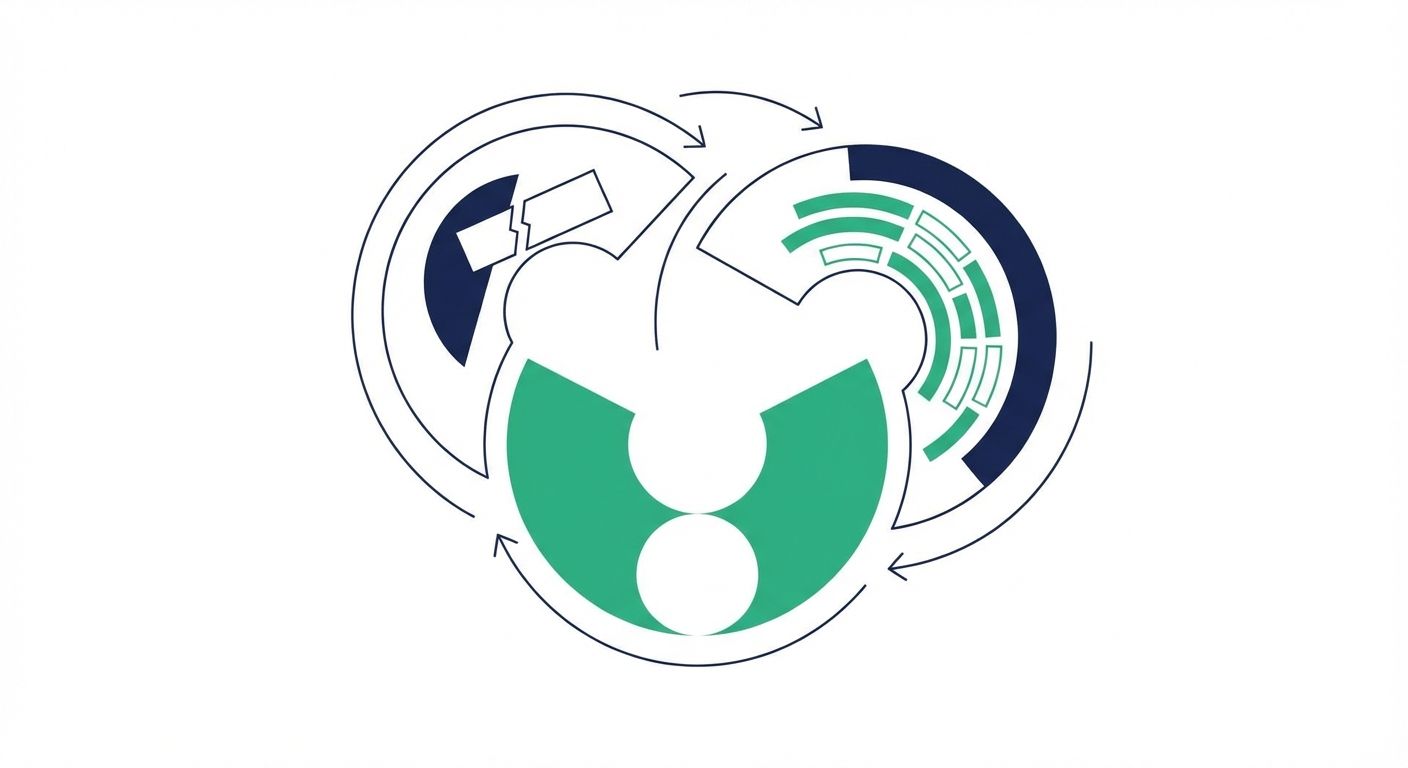
TDD is best understood as a design discipline rather than a testing technique. The tests are a valuable byproduct, but the real benefit is how the red–green–refactor cycle shapes your thinking about interfaces, responsibilities, and simplicity.
By forcing you to define behaviour before implementation, TDD pushes you to design from the outside in: you clarify what a unit should do, how it should be used, and what its boundaries are, before worrying about how it works internally. This naturally leads to smaller, more focused functions, clearer contracts, and fewer hidden dependencies.
The discipline of writing only the simplest code to make a failing test pass counteracts the common tendency to over‑engineer and speculate about future requirements. Instead of building speculative abstractions, you evolve the design incrementally, guided by concrete, executable examples of desired behaviour. Refactoring with a safety net of tests then lets you continuously improve structure without fear of breaking existing behaviour.
Objections about TDD being slow or unsuitable for complex systems usually stem from treating it as “tests first” for coverage rather than as a design loop. At different scales you adjust the granularity of tests—from small unit tests to higher‑level acceptance or integration tests—but the core principle remains: clarify intent, then implement, then refine.
Practising TDD on small, well‑bounded problems is the fastest way to internalise this rhythm. Over time, the habit of thinking in terms of observable behaviour, clear interfaces, and minimal implementations carries over even when you are not formally doing TDD. That is why, ultimately, TDD is not about tests; it is about cultivating a deliberate way of thinking before you type.